Virginia's brewery self-distribution channel grew twelvefold last year and still moved 550 barrels
The Virginia Beer Distribution Company's fiscal 2026 report, filed with the General Assembly October 1, shows 42 licensed breweries, 295 registered retailers and $303,011 in sales. The whole state moved about what one brewery is allowed to ship by itself.
The state-run channel Virginia breweries fought for over three General Assembly sessions sold $303,011.68 of beer last year.
That is the headline figure in the Virginia Beer Distribution Company’s annual report, which Commissioner of Agriculture and Consumer Services Charles Green filed with the General Assembly on October 1 under § 3.2-102(B)(3). The report has not been covered.
By its own measures the year went well. Sales rose about elevenfold from fiscal 2025. Barrels rose twelvefold. Orders rose tenfold. The company beat the forecast in its own previous annual report by 68%, and it says retailers signed up faster than it expected.
The absolute numbers are the story anyway.
Across the entire commonwealth, for the twelve months ending June 30, the channel moved 550.26 barrels, or 7,581 case equivalents, across 1,074 orders. State law lets a single Virginia brewery move 500 barrels a year this way. Every participating brewery in Virginia, put together, moved about what one of them is allowed to ship on its own.
What the channel is
The Virginia Beer Distribution Company is a nonprofit, non-stock corporation housed inside the Department of Agriculture and Consumer Services. It exists, in the report’s words, “to provide wholesale beer distribution services for licensed Virginia breweries.”
It was the compromise. Virginia breweries had pushed for ordinary self-distribution, which the wholesale tier opposed. HB 2258 in 2023 produced this instead: a state-operated wholesaler that small breweries can sell through without signing a distribution agreement, capped at 500 barrels per brewery per calendar year. The board seats two members of the Virginia Beer Wholesalers Association, two from the Virginia Craft Brewers Guild, and the VDACS commissioner.
It took effect July 1, 2024 and made its first sale on January 28, 2025.
For a brewery too small to interest a distributor, the appeal is direct. It can get its beer onto a retailer’s shelf or tap without surrendering territory under the Virginia Beer Franchise Act, which is considerably easier to grant than to take back.
The participation numbers are healthy
Breweries are signing up. Licensed wholesale locations went from 19 at the start of the year to 42 at the end, with 25 added during the year and six more pending on June 30. Four declined to renew. Locations that actually distributed something rose from 13 to 37.
Retailers are signing up faster. Registrations reached 295, up from 74 a year earlier. Registration is free for retailers.
The company also replaced its software. Working with Tyler Technologies, it launched Sip Virginia, a single system covering both the beer company and its older sibling, the Virginia Wine Distribution Company, so that a retailer already registered to buy wine can register for beer. The report calls that build “a much larger undertaking than originally anticipated.” The previous platform won a Silver w3 Award.
The volume numbers are not
Divide the figures and the picture changes.
The average order was $282, about seven cases. The 37 locations that distributed anything averaged 14.87 barrels each for the year, which is about 3% of the 500 barrels each was entitled to move. The 295 registered retailers averaged about 26 cases apiece across twelve months, roughly two cases a month.
Virginia collected $4,451.18 in beer wholesale taxes on the entire year’s activity. Transaction fees, which do not go to the general fund, came to $11,421.38.
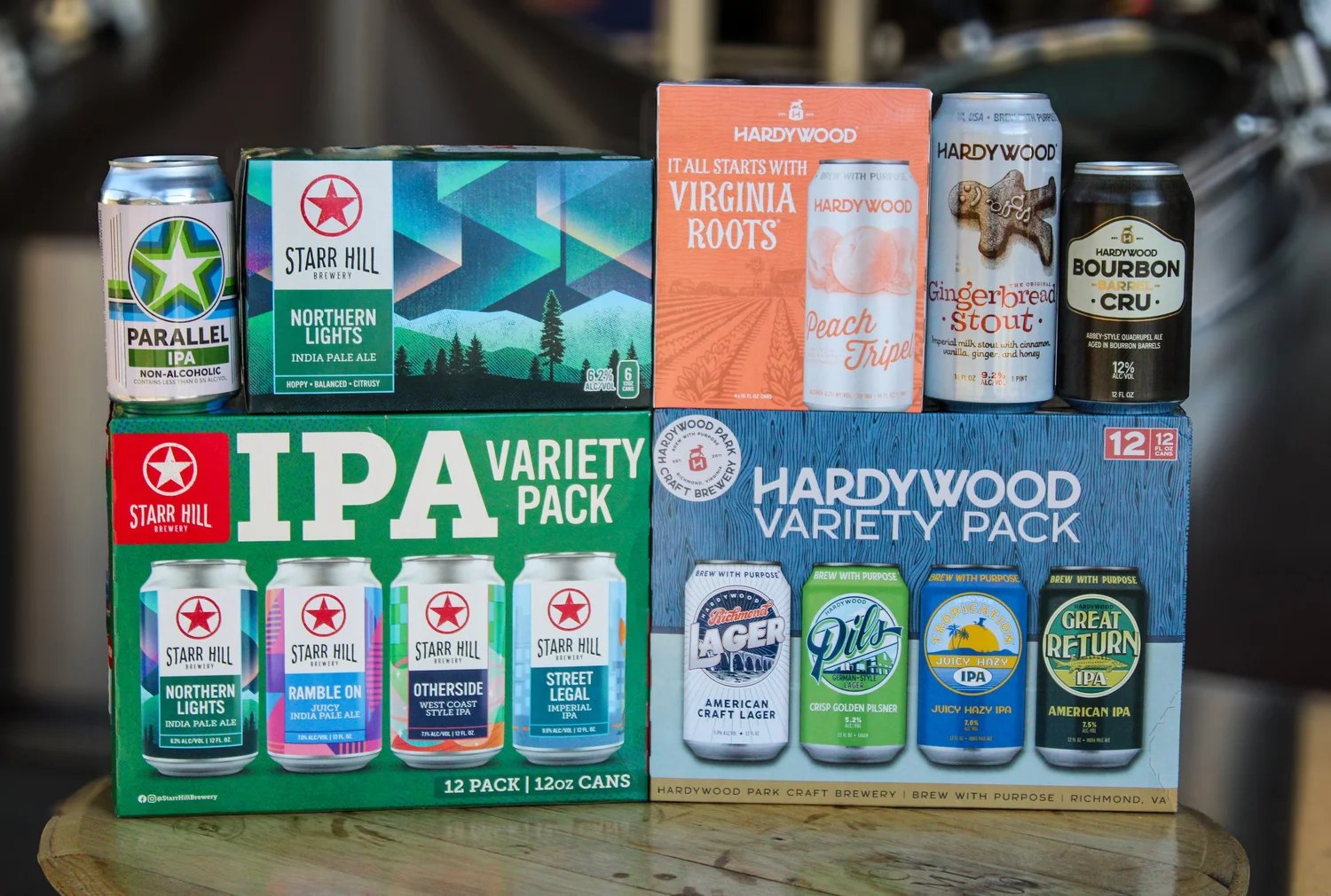
Scale it against the market the channel sits in. Hardywood Park Craft Brewery expects to produce about 25,000 barrels in 2026, Richmond BizSense reported this month. The statewide self-distribution channel moved roughly 2% of what one Virginia brewery makes.
The report notes that 74 retailers had registered by the end of fiscal 2025 out of more than 17,000 Virginia retailers licensed to buy beer. At 295, registration now covers under 2% of them.
The report does not say why
It offers no explanation for volume per participant, and that is the question worth asking, because the answer determines whether the channel grows into something useful or stays a rounding error.
The rules themselves supply candidates. A brewery pays about $1,500 to get licensed, including a $195 application fee, newspaper publishing costs and a $1,005 state license fee, then $1,005 every year after. VBDC estimates roughly 60 days from registration to license. The brewery must build a separate, secure, lockable VBDC space on its licensed premises, and under § 4.1-310.1 product has to come to rest in that space for at least four hours before it can go to a retailer. Transaction fees run 3% for a limited brewery and 4% for a brewery. Kegs carry a $30 deposit. Price increases take 30 days to take effect, while decreases are immediate.
None of that is unreasonable on its face. Together it describes a channel that rewards a brewery already making regular wholesale deliveries and penalizes one testing the water, which may be most of the 42.
What the report cannot tell you is which constraint binds. Whether breweries are hitting freight economics that do not work below a certain drop size, whether retailers find ordering through a state platform more friction than calling a distributor, whether the four-hour rest and the separate room make small or mixed orders impractical, or whether most licensees simply registered to keep the option open and have not worked it. Those are different problems with different fixes.
Why it matters now
The Virginia Craft Brewers Guild lists defending “Virginia’s ‘Hybrid Self-Distribution’ Laws & Brewery Operational Rights” as its first advocacy priority, and separately commits to “support and optimize the performance of the Virginia Beer Distribution Company.”
Those are the same fight, and this report is the evidence base for it. A channel moving 550 barrels and generating $4,451 in state wholesale tax is easy to characterize as a failed experiment by anyone who would rather it went away, and equally easy to characterize as a young program growing twelvefold a year by anyone defending it. Both readings are fair on these numbers.
The company projects fiscal 2027 at roughly 103 transactions a month, an average order near $300, about $375,000 in annual sales, $5,500 in wholesale taxes and $15,000 in transaction fees. That is a quarter again on this year, and it would still leave the statewide channel moving less beer than a single mid-size Virginia brewery.
For a brewery weighing whether to join, the useful questions are not in this report. They are what the breweries already licensed have learned about drop sizes, delivery routes and retailer reorder rates, and whether the channel pays for its own $1,005 a year.