
Virginia Wineries Face Severe Grape Shortage as 2026 Harvest Collapses
April's destructive freeze left some vineyards with only a fraction of their normal crop. Wineries are now cutting production, rationing inventory and confronting Virginia's farm-winery sourcing requirements.
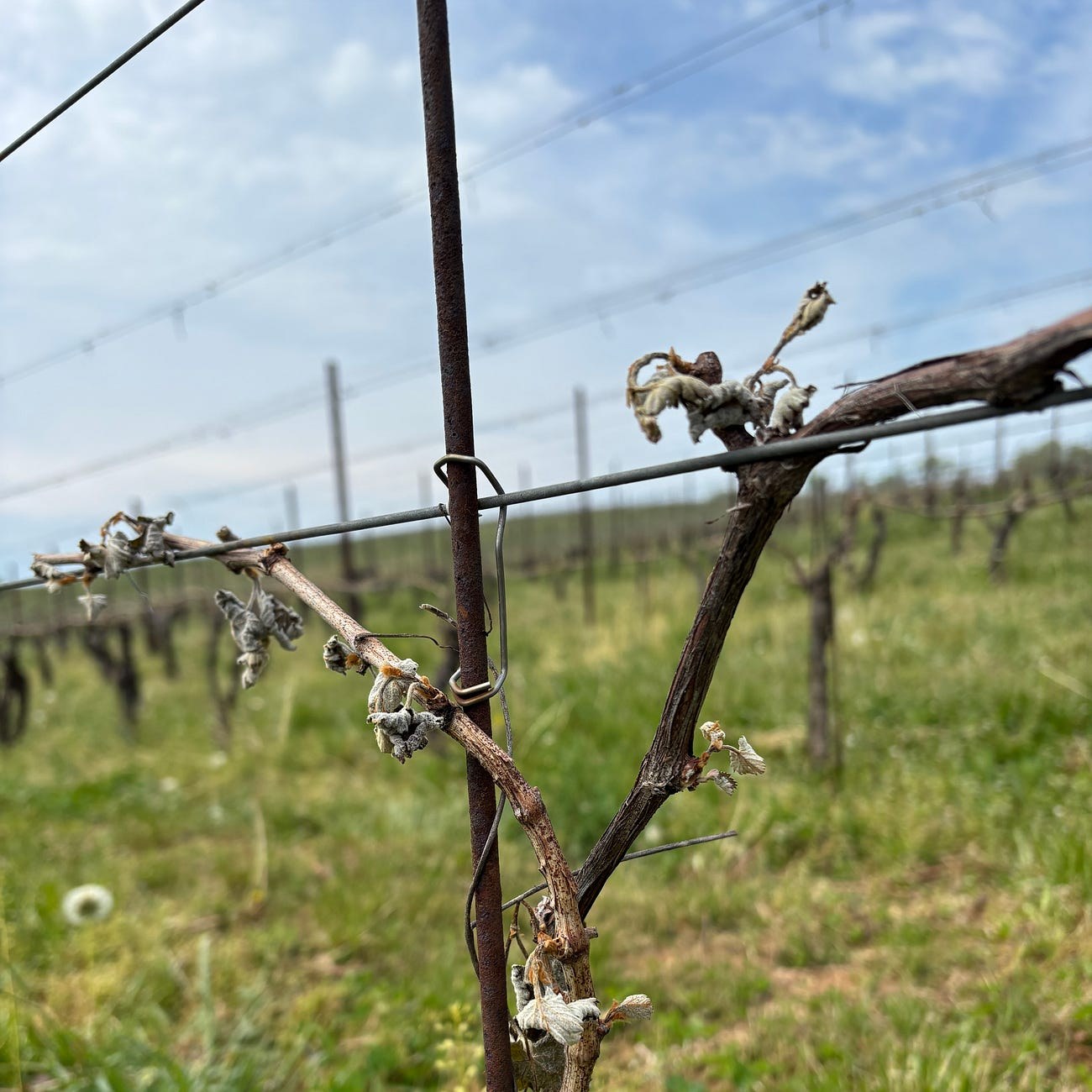
Virginia wineries are entering the 2026 harvest with sharply reduced grape supplies, forcing producers to cut case volume, reconsider planned wines and decide whether to purchase fruit or finished wine from outside the Commonwealth.
The effects vary by vineyard and region, but newly reported production figures show severe losses at several established wineries. Some operators are preparing to make fewer white wines and rosés, while others are conserving existing inventory or redirecting their limited fruit into products expected to produce a stronger return.
The shortage follows several nights of freezing temperatures during March and April, after unusually warm weather had already pushed vines, fruit trees and other crops into vulnerable stages of development.
Virginia Cooperative Extension initially estimated direct agricultural losses from the freeze at between $32.4 million and $105.3 million. The statewide estimate included grapes, apples, peaches, berries, cherries and other crops, but did not assign a separate loss figure to the wine industry.
Now that harvest is underway, individual wineries are beginning to quantify the damage.
Production drops at Virginia wineries
Boxwood Estate Winery in Middleburg normally harvests between 70 and 90 tons of grapes for nine wines. This year, the winery reportedly harvested fewer than six tons after losing more than 90% of its white grape varieties.
Rather than divide the limited harvest among several wines, Boxwood plans to use the fruit for a single sparkling wine priced at approximately $60 per bottle. The winery also estimates that about 10% of its vines died and will need to be replanted.
At Slater Run Vineyards in Upperville, crop losses reached approximately 75%. The winery, which normally produces as many as 3,000 cases, could make as few as 520 cases from the 2026 harvest.
Slater Run is also removing some white wines from its tasting-room menu to preserve inventory through next year. Much of its surviving red fruit is being directed toward rosé as consumer demand continues to favor white and pink wines.
Hazy Mountain Vineyards & Brewery, which operates properties in Afton and Leesburg, normally harvests approximately 160 tons of grapes. It expects only about 20 tons this year.
The winery reportedly raised the asking price for available grapes by about 20%, to approximately $3,000 per ton. Even varieties that can be more difficult to sell were purchased quickly as wineries searched for available Virginia fruit.
The winery-specific production figures were first reported by Axios on September 21.
Existing inventory may delay the full impact
The shortage does not mean Virginia wineries will immediately run out of wine. Established producers may have enough inventory from previous vintages to support tasting-room and wholesale sales in the short term.
The longer-term effect will depend on the type of wine being produced.
White wines and rosés made from the 2026 harvest would ordinarily reach the market beginning next spring. Many red wines may not be bottled or released for another year or two. The most visible effect could therefore emerge gradually as wineries release fewer bottles, revise tasting menus or reduce wholesale allocations.
The shortage could also change what wineries produce. Winemakers expect more blends and non-vintage wines as producers combine available grape varieties or use wine from multiple harvest years to maintain production.
For smaller wineries with limited inventory, the effect could be more immediate. A severe reduction in production can affect future tasting-room sales, wine-club shipments, wholesale commitments and cash flow long after the damaged crop is harvested.
Out-of-state fruit raises a licensing question
Purchasing grapes, juice or bulk wine from outside Virginia may help wineries maintain production, but the decision carries regulatory and branding consequences.
Virginia’s farm-winery licenses include specific sourcing requirements that vary by license class.
Class I farm wineries generally must use fruit or agricultural products grown on the licensed premises. Class II licensees must obtain at least 51% of their fruit from Virginia property owned or leased by the winery, and no more than 25% may come from outside Virginia. Class III and Class IV farm wineries generally must use at least 75% Virginia-grown agricultural products.
State law provides a mechanism for temporary relief.
Under Virginia Code § 4.1-219, the Virginia Alcoholic Beverage Control Authority’s Board of Directors may allow additional out-of-state agricultural products when Virginia supplies are insufficient to support the production a winery could otherwise expect during the license year.
The Board may also relax certain requirements that fruit be grown on property owned or leased by the winery when unusually severe weather or disease substantially reduces production. The statutory relief requires a petition from the Virginia Department of Agriculture and Consumer Services.
It is not yet clear whether VDACS has submitted such a petition for the 2026 crop year, whether the ABC Board has approved relief or how many farm wineries may need an exception.
Even if state sourcing relief becomes available, wineries using substantial amounts of fruit from outside Virginia may face separate federal appellation and labeling considerations. A wine that no longer qualifies for a Virginia appellation may need to be marketed under a broader geographic designation.
That presents a difficult business decision for producers that have built their brands around Virginia-grown grapes and the identity of Virginia wine.
Losses extend beyond the vineyard
The freeze’s hospitality impact reaches beyond the amount of wine produced.
Farm wineries depend heavily on tasting-room sales, wine clubs, weddings, private events and other forms of agritourism. Reduced production could eventually leave wineries with fewer bottles to sell through their highest-margin channels.
Lower production also affects vineyard employees, seasonal harvest crews, custom-crush facilities, mobile bottlers, distributors and restaurants that feature Virginia wines.
The immediate questions are how much Virginia’s total grape harvest has declined, whether state sourcing relief will be granted and how long existing winery inventories can postpone the effect on consumers.
For many established producers, one poor vintage may be manageable. Smaller wineries with limited inventory, fewer sourcing relationships or substantial debt may have considerably less room to absorb another year of reduced production.