Which Virginia ABC license do you actually need?
Virginia ABC issues more than seventy license and permit types. Most operators only ever need one of about a dozen. Here is how to find yours without reading the whole code.

The most expensive mistake a new Virginia operator makes is not picking the wrong license. It is discovering, six weeks into a build-out, that the license they assumed they were getting is not the license their concept qualifies for.
Virginia ABC publishes more than seventy license and permit types. The list is exhaustive, alphabetical, and almost perfectly designed to be unhelpful to someone who just wants to know what to apply for. Here is the shorter version.
Start with two questions
Everything downstream follows from these:
- Are people drinking it here, or taking it away? On-premises and off-premises are different license families. Some businesses need both.
- Are you serving spirits, or only beer and wine? Spirits pull you into the mixed beverage world, which carries the food requirements, the annual review and most of the compliance burden.
If the answer is “here” and “beer and wine only,” your life is dramatically simpler than the restaurant next door.
The licenses most operators actually use
If you serve spirits
Mixed Beverage Restaurant is the standard restaurant license. It carries the food-to-beverage requirements and the annual review. Most full-service restaurants land here.
Limited Mixed Beverage Restaurant is a narrower version for operations that do not meet full mixed beverage restaurant criteria. Worth asking about if your kitchen is small.
Mixed Beverage Caterer, and the combined Mixed Beverage Caterer and Mixed Beverage Restaurant, cover off-site service. If you cater weddings out of a restaurant kitchen, the combined license is usually what you want rather than two separate filings.
Mixed Beverage Limited Caterer is the scaled-down caterer option.
There are also setting-specific versions: Mixed Beverage Casino, Mixed Beverage Restaurant at Casino, and Mixed Beverage Restaurant at Point of Entry for airports and similar.
If you serve beer and wine only
Retail On- and Off-Premises Wine and Beer is the workhorse. Serve it in the room and sell sealed product to go.
Retail Off-Premises Wine and Beer is sales to go only.
Convenience Grocery Store and Marketplace cover retail formats rather than restaurants.
Bed and Breakfast is its own license, and lodging operators frequently miss that it exists.
If it is an event, not a business
This is where most people apply for the wrong thing.
Banquet covers a private event. Banquet Special Event and Banquet Mixed Beverage Special Event cover larger or spirit-serving events. Mixed Beverage Special Event and Mixed Beverage Club Event cover club and organizational functions. Annual Events exists for recurring events so you are not filing every single time.
If you run a festival, a fundraiser, or a pop-up more than once a year, the annual options are worth asking about specifically. Nobody at ABC will volunteer that you have been filing one-offs unnecessarily.
If you make it
Brewery and Limited Brewery, Distillery and Limited Distillery, Winery and Farm Winery. The limited versions carry different privileges around on-site sales and tasting rooms, and the difference matters enormously to a taproom’s business model. This is a decision to make with counsel, not from a web page.
The permits people forget
Permits are separate from licenses, and several catch operators out:
- Culinary permit, for cooking with alcohol.
- Continuance of Operation, which matters during an ownership transition. If you are buying a restaurant, ask about this early.
- Solicitor Salesman permits, for anyone selling to licensees.
- Out-of-State Delivery, Third-Party Delivery, and shipping-related licenses, which have grown steadily in relevance and which plenty of operators are quietly out of compliance on.
Before you apply
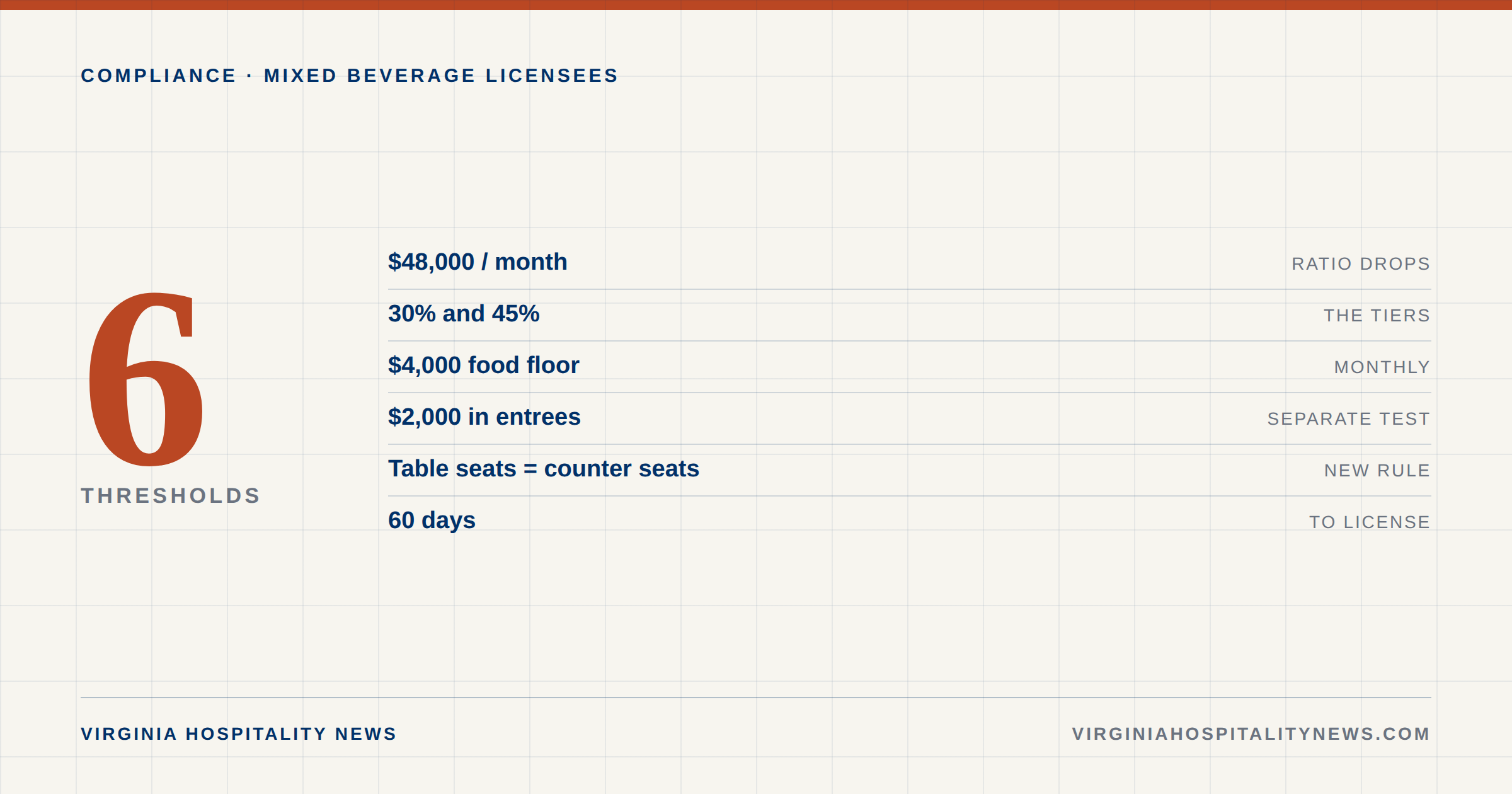
Budget sixty days. Virginia ABC states that applications take on average up to 60 days to process. That is an average, not a ceiling, and it does not start until your application is actually complete. An operator who signs a lease and plans to open in five weeks is planning to open without a license.
Talk to your regional office and your special agent. ABC describes special agents as the primary resource for questions about operating a licensed establishment. They are, and most operators only meet theirs after something has gone wrong. Meet yours first.
Check the local layer. A state license is not the whole picture. Local zoning, conditional use permits and local fees under § 4.1-233.1 all sit on top, and a locality can impose conditions the state does not.
The one-line version
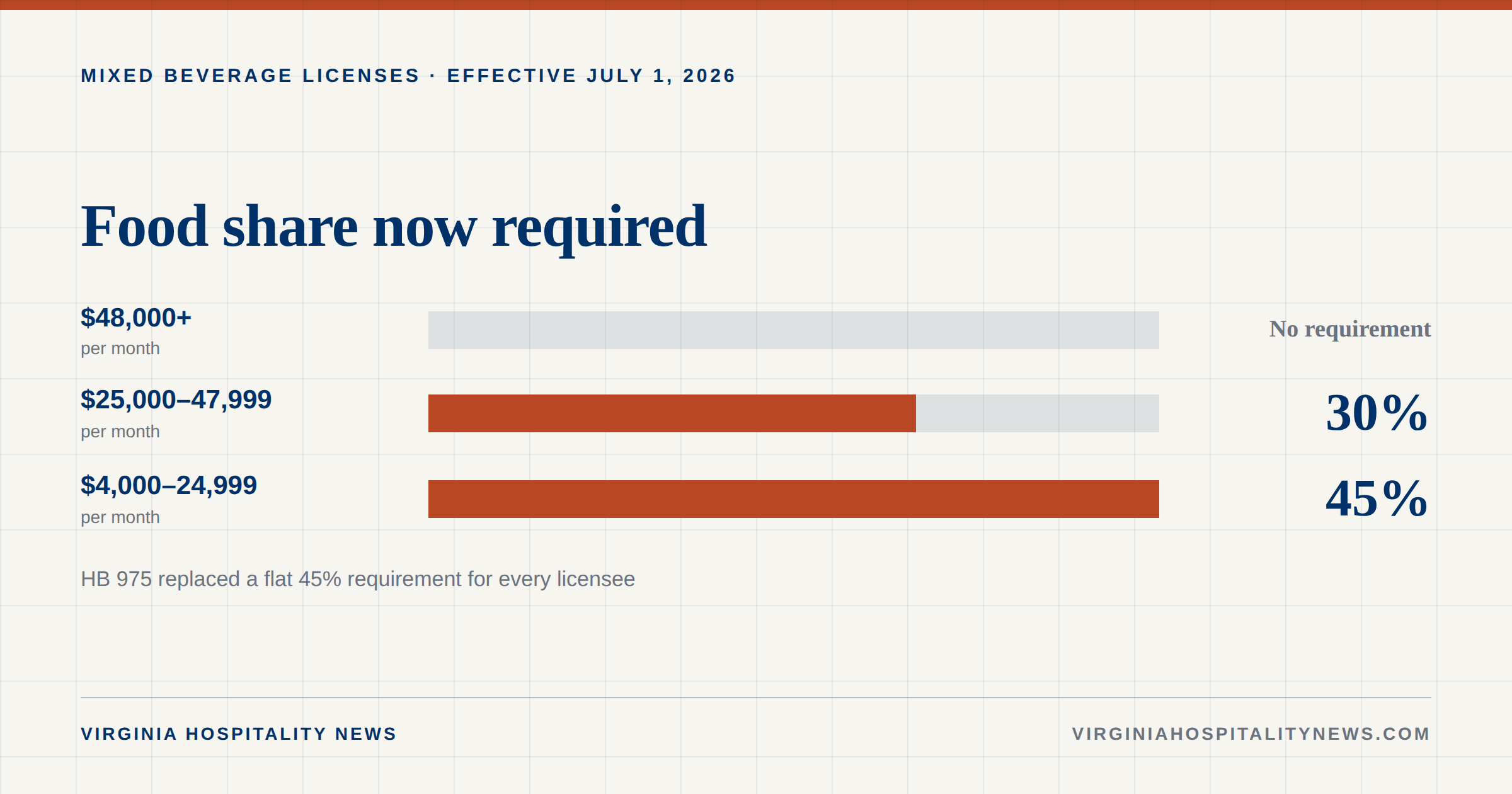
If you are a restaurant serving spirits, you are almost certainly a Mixed Beverage Restaurant, and you should read up on the food-to-beverage tiers and the annual review before you open, not after.
If you are anything else, the list above narrows seventy options to about a dozen. Take that dozen to your regional ABC office and let them tell you which one, in writing.