
Stafford rejects BPOL tax after marathon public hearing
Restaurants, hotels, breweries and other businesses stay outside a proposed gross-receipts tax after supervisors failed to adopt Ordinance O26-34. The county's merchants' capital tax survives, and the ordinance would have displaced it.
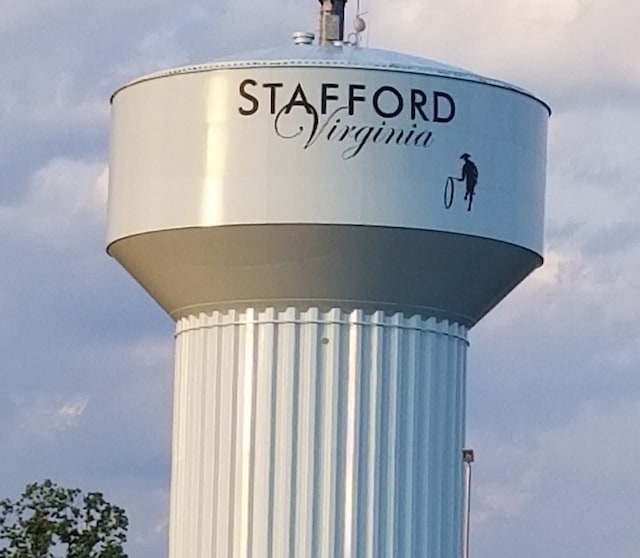
Stafford County will remain without a Business, Professional and Occupational License tax after the Board of Supervisors failed to adopt a proposed gross-receipts tax following hours of public opposition.
Chairman Deuntay Diggs announced that the motion on Proposed Ordinance O26-34 had failed during the board’s September 15 meeting. The session began at 5 p.m. and, according to Potomac Local News, adjourned at 12:59 a.m. on September 16.
The outcome is a material reversal from the proposal the county advertised for public hearing. Restaurants, hotels, breweries, caterers and other Stafford businesses will not owe the proposed BPOL tax under Ordinance O26-34, which would have taken effect January 1, 2027 and assessed the first license year on 2026 gross receipts.
Stafford has long marketed the absence of BPOL as a business-recruitment advantage over neighboring Virginia localities. The county’s own economic development department publishes a page calling it “a tax incentive that is rare in this part of Virginia.” The failed vote preserves that position for now, although it does not prevent a future board from considering a revised tax structure.
How the proposal would have worked
The ordinance generally would have imposed a BPOL tax once a business exceeded $2 million in annual gross receipts. A business above the threshold would have been taxed on its taxable receipts beginning with the first dollar, rather than only on the amount above $2 million.
The principal proposed rate was 16 cents per $100 of gross receipts, applied to contractors, retailers and merchants, financial, real estate and professional services, and repair, personal and business services. Wholesalers would have paid 5 cents per $100 of purchases rather than receipts, and certain classifications carried flat levies, from $250 a year for itinerant merchants and peddlers to $500 per performance for carnivals, circuses and speedways. Businesses below the threshold would have paid a $50 annual license fee instead of the tax; the ordinance applied that fee to “every person not subject to payment of the gross receipts license tax.”
That structure made the $2 million threshold especially important. It operated as a trigger, not as a deduction. A restaurant group or hotel that crossed the line could move from a flat fee to a tax calculated on the full taxable base.
The county’s own hearing presentation illustrated the point. A business with $2.5 million in receipts was shown owing $4,000, because, in the presentation’s words, the “exemption doesn’t apply, since gross receipts are over $2.0M.” The 16-cent rate applied to all $2.5 million, not to the $500,000 above the line. The ordinance defined gross receipts as “the whole, entire, total receipts attributable to the exercise of a privilege subject to licensure, without deduction,” subject to narrow statutory exclusions.
For hospitality companies with high sales but narrow margins, a gross-receipts tax can produce a different burden from an income tax. Food, beverage, labor, rent, franchise fees and other costs do not reduce gross receipts before the local levy is calculated.
A related measure, Proposed Resolution R26-341, would have appropriated $210,000 for two new positions in the Commissioner of the Revenue’s office and BPOL administration software, plus $8,000 from reserves for furniture and computers, and raised the county’s authorized full-time strength from 1,235 to 1,237. Its first clause was conditional on adoption of the ordinance, and it did not advance after the tax failed.
Hospitality operators joined the opposition
Public testimony was heavily opposed to the proposal, according to coverage of the hearing. Barry Boyd of Barley Naked Brewing Company in Stafford was among the hospitality operators who spoke against adoption, telling the board the tax “is not the way to go.”
Opponents argued that a new gross-receipts tax would weaken Stafford’s competitiveness and add costs during a period of pressure from wages, insurance, utilities, food and financing. One speaker noted that the county’s own economic development department advertises the absence of BPOL on its website. Supporters of additional revenue had framed the issue around county service and budget needs.
The result also leaves Stafford’s merchants’ capital tax in place, a tax the ordinance would have displaced. County staff told the board that a locality “may not impose both a merchants’ capital tax and the category of merchants tax under BPOL,” and O26-34 as advertised set retailers and merchants at 16 cents per $100. Staff projected the merchants’ capital tax at about $1.15 million in fiscal 2027. It applies to certain inventory and business property under existing county rules.
No certified roll-call tally for the final adoption motion is available yet. The Fredericksburg Free Press reported that the ordinance failed 5-2, with only Supervisors Pamela Yeung and Kecia Evans in support. Potomac Local News reported that meeting records give no clean named tally. Stafford has published approved minutes for its August 18, August 25 and September 1 meetings, but the September 15 minutes have not been approved or posted, and no minutes-approval item for that date appears on the board’s October 20 agenda. The county’s certified minutes should be used for the final named vote.
The issue may return
Failure of O26-34 settles the advertised ordinance, not Stafford’s long-term revenue debate. Supervisors could revisit BPOL in another budget cycle, alter the threshold, narrow the classifications or pursue a different business-license structure. The staff report noted that the $2 million figure “can be increased at the Board’s discretion,” and state law sets the floor for such an exemption at $100,000.
Hospitality operators should therefore retain the financial analysis they prepared for the September hearing. A future proposal may use different rates while preserving the same gross-receipts base, and businesses will need to model the effect on individual properties rather than rely on countywide averages.
The vote also offers a lesson for operators elsewhere in Virginia. BPOL proposals can move quickly from general budget discussions to advertised ordinances with specific rates, thresholds and filing requirements. Trade groups and independent operators need to review the actual ordinance text, because a headline exemption can function differently from a deduction once a business crosses the threshold.
For Stafford, the immediate answer is clear. Ordinance O26-34 did not pass, the proposed tax will not take effect, and the county remains one of the Virginia localities that does not impose BPOL.