
Clarke County settled the brewery event-cap suit. No court ever ruled.
Kinder Bauernhof Farm and Chilly Hollow Brewing sued Clarke County in October 2023 over rules banning weddings, cover charges and advertised events. The owners confirm to VHN that the case has settled. Terms were not disclosed and no court ruled.
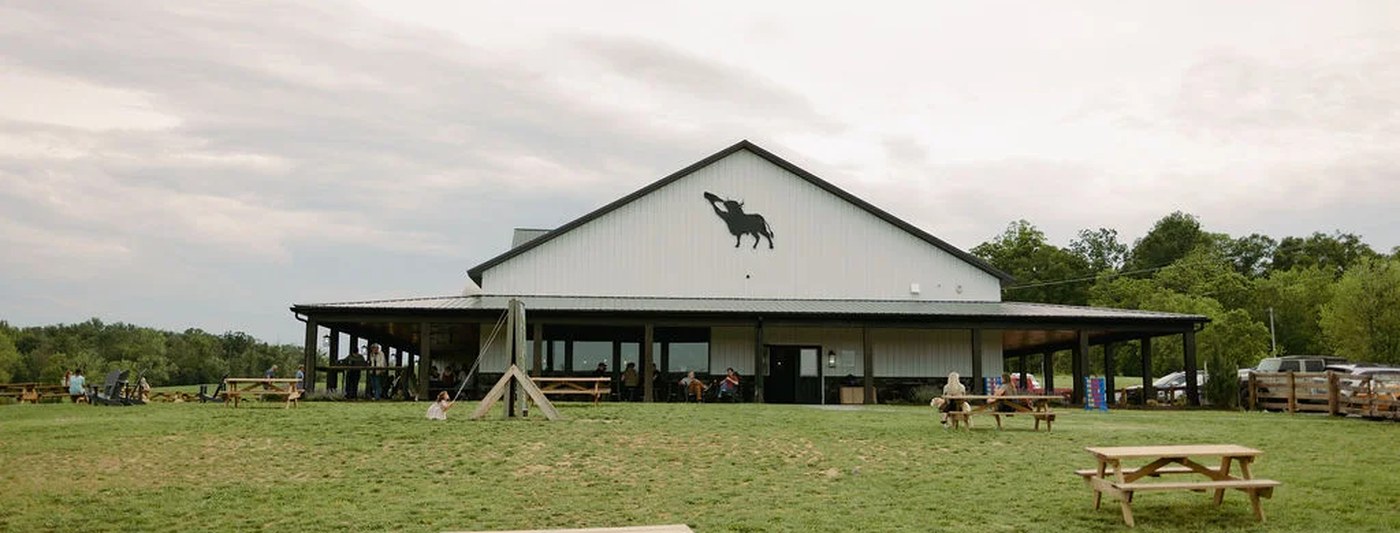
The lawsuit that was going to tell Virginia what a county may and may not do to a farm brewery’s event calendar is over, and it ended without a decision.
Kinder Bauernhof Farm and Chilly Hollow Brewing settled their case against the Clarke County Board of Supervisors, the owners confirmed to VHN. Terms were not disclosed.
The brewery, on Chilly Hollow Road outside Berryville, opened in December 2024 while the case was pending and has operated since without further conflict with the county.
What the county had adopted
Clarke County amended its zoning ordinance on September 19, 2023, covering farm wineries and breweries in its Agricultural-Open Space-Conservation and Forestal-Open Space-Conservation districts. The amendments:
- required any building with amplified sound to sit at least 300 feet from a property line
- cut off amplified sound at 7 p.m. Sunday through Thursday and 9 p.m. Friday and Saturday
- permitted entertainment only if it was not advertised as a special event and no cover charge was imposed
- prohibited weddings, private parties, overnight lodging and amusement rides outright
- allowed temporary food vendors while prohibiting regular food service
The plaintiffs filed in Clarke County Circuit Court on October 18, 2023, represented by Daniel M. Casto of Campbell Flannery in Leesburg. They asked for a declaratory judgment that the amendments were arbitrary, capricious, unreasonable, discriminatory, confiscatory, without a valid governmental purpose and contrary to Virginia law. They sought no money.
The 135-foot gap
The plaintiffs’ own site plan put their building 165 feet from the front property line. The county did not publicly disclose the 300-foot setback until July 12, 2023, two months before adoption.
A business that had already drawn its plans was, on the day the ordinance passed, 135 feet short of a number it had not known existed when it sited the building. A settlement leaves that sequence unexamined.
Why a settlement is the expensive outcome for everyone else
Virginia has three separate statutes shielding farm beverage businesses from local zoning, and they are not equally strong.
Farm wineries get the most under § 15.2-2288.3: usual and customary activities and events “shall be permitted without local regulation” unless there is a substantial impact on public health, safety or welfare.
Limited breweries get § 15.2-2288.3:1, which protects “usual and customary activities and events” but drops the phrase “without local regulation.” Its noise provision says a local ordinance for brewery activities “shall be no more restrictive than that in the general noise ordinance,” carving out outdoor amplified music.
Limited distilleries get § 15.2-2288.3:2, which has no policy preamble and no noise provision at all.
The words in those statutes have never been tested. Section 15.2-2288.3 took effect in 2006. Two decades on, there is no published Virginia decision applying the usual and customary and substantial impact test to a local event cap. Clarke was the live case. It is now gone, and the standard is exactly as undefined today as it was in 2023.
That has a practical cost. Every county drafting an event cap is guessing at the line, and every producer subject to one is guessing at whether a suit is worth it. Both sides are negotiating in the dark, which tends to favor whoever can absorb legal fees longer.
What it means for the counties moving right now
Loudoun County takes up winery, brewery and distillery event rules on November 9, meeting six of seven for the ad hoc committee rewriting its rural zoning. The committee’s charge bars new research, so the shape of the policy will be largely set before that session.
Greene County supervisors are weighing an event cap of their own.
Neither will find a Virginia case telling them where the ceiling is. What Clarke offers instead is a data point about process rather than law: a county adopted restrictions of this kind, was sued, and settled.