
Gary Cohen is retiring from Glory Days Grill after two decades. Advocacy is where he says he is going next.
The 2018 Restaurateur of the Year and 2020 VRLTA chairman announced his retirement on August 31. He spent the last years of his tenure making the industry's case in public, on the record, under his own name, and he says he intends to keep doing it.
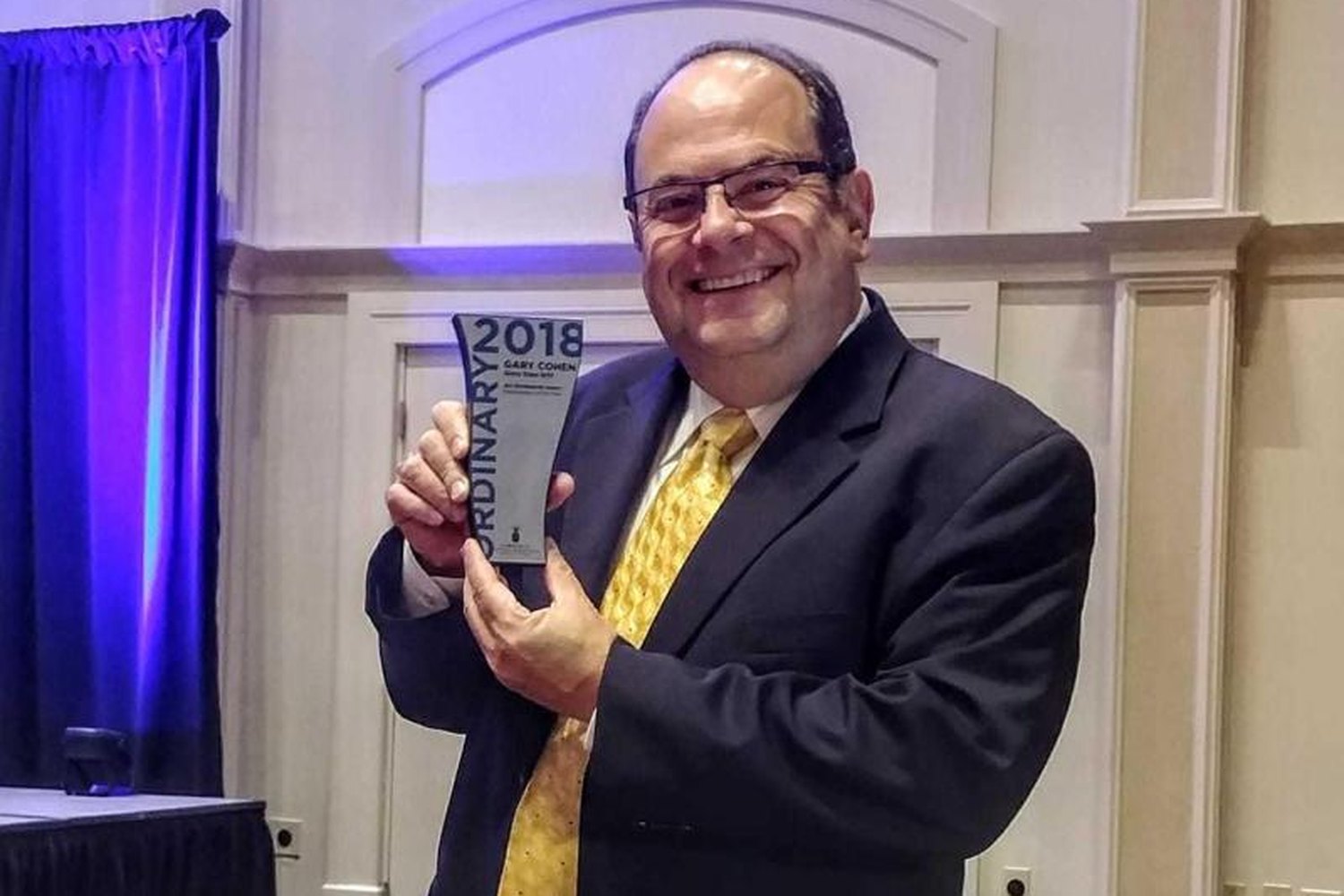
Gary Cohen announced on August 31 that he is retiring from Glory Days Grill after two decades, most recently as executive vice president of government affairs and franchising. He said he intends to keep working on government affairs and advocacy for the hospitality industry.
He was Restaurateur of the Year in 2018 and chaired the VRLTA in 2020.
The announcement came from Cohen himself. Neither Glory Days Grill nor the VRLTA has posted anything about it.
He showed up, which is rarer than it should be
Plenty of operators complain about taxes and fees. Very few will put their name and their company on the record in a television interview about it, repeatedly, over years. Cohen did.
In March 2025, as Fairfax County weighed a countywide meals tax against a roughly $300 million budget shortfall, he told WJLA: “This would be a permanent tax on food which I think is the last thing you want to tax.” He added the line that actually carried the argument, because it was about his own numbers rather than a principle: “People have already started eating less, it shows in our numbers.” He had made the same case the previous August.
Fairfax adopted the tax anyway. It took effect on January 1, 2026, at 4%, imposed without a referendum, because since 2020 counties have not needed one. An industry that mostly stayed quiet had one person willing to stand up in front of a camera and be quoted by name.
In August 2025 he hosted Sen. Tim Kaine at the original Glory Days in Burke for a roundtable on staffing, costs and tariffs, and made the interchange fee argument better than most trade groups manage:
“We’re a business of pennies. We’re not looking for millions of dollars. We’re just looking for credit card fees to go from 2.8% to 2.6%.”
That is a whole policy brief in twenty-eight words, and it is why his going into advocacy full time is a real development rather than a courtesy line in a retirement notice.
The record
He arrived in September 2006 as director of development, became vice president of operations for Glory Days, Inc. and the franchising company in 2007, and was promoted to executive vice president effective December 26, 2016. The announcement at the time credited him with thirty-seven years in restaurants, which puts him well past four decades now. Before Glory Days he worked at Marriott Dinner House, Vie de France Bakery Cafes and That’s Amore Restaurants.
At the 2018 Ordinary Awards he won the Jim Wordsworth Award for Restaurateur of the Year. The same night, the Burke Glory Days Grill and managing partner Jim Rafferty took Restaurant of the Year. Those are two separate awards and they get conflated constantly.
He chaired the VRLTA statewide in 2020, which is to say he led Virginia’s hospitality association through the year the industry was closed.
He also sits on the Fairfax-Loudoun chapter board. This year’s Ordinary Awards are on September 15, twelve days from now.
The company he leaves
Glory Days opened in Burke in 1996, founded by Richard Danker, Robert “Bob” Garner and Jeff Newman. In September 2022 the founders sold 22 corporate locations in Virginia and Maryland to Play Ball Florida, led by Bob Basham, co-founder of Outback Steakhouse and Danker’s brother. Garner and Newman retired after 26 years; Danker stayed on as co-owner.
The brand marked 30 years in April and today lists 34 restaurants across four states: 15 in Florida, 14 in Virginia, 4 in Maryland and 1 in West Virginia.
Cohen’s twenty years cover most of that arc, from a Fairfax County chain to a four-state one.
What comes next
He has not said what form the advocacy will take: an association, a consultancy, a board seat, or something else. No effective date has been given and no successor named.